The short answer
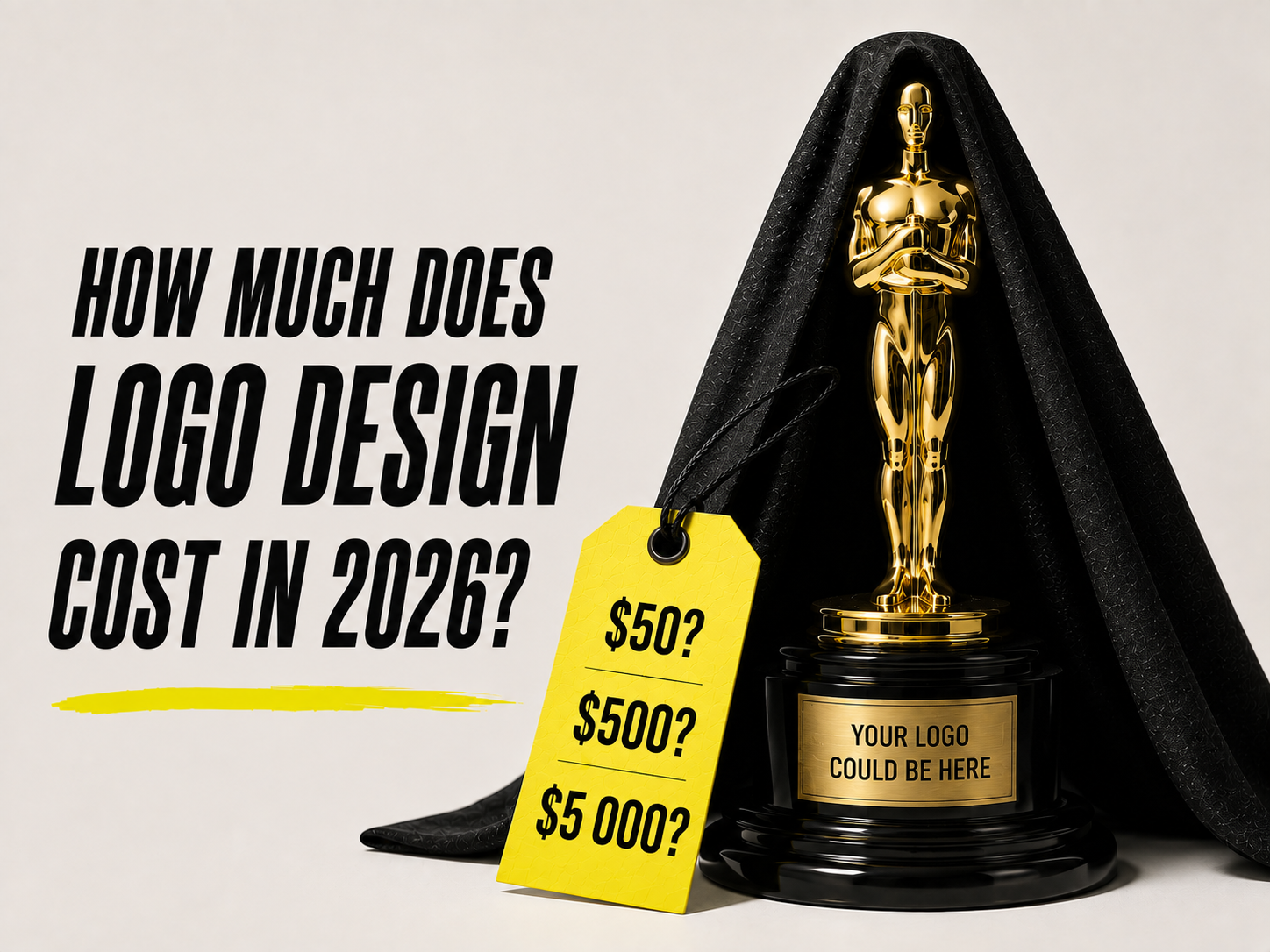
Logo design in Latvia can cost anything from a few dozen euros for a template or automatically generated mark to several thousand euros for a professional logo system, visual identity and brand strategy.
| Solution | Approximate price |
|---|---|
| DIY, template or logo generator | €0-€100 |
| Basic freelance logo | €100-€500 |
| Professional custom logo | €500-€1,500 |
| Logo and visual identity | €1,500-€5,000 |
| Brand strategy, identity and brand book | €5,000-€15,000+ |
These are market indications, not a universal price list. A €300 proposal may cover one graphic mark and a few files. A full-cycle project can include market and audience research, positioning, several reasoned creative directions and a system designed to work across the website, advertising, social media, presentations and print.
- standalone logo design - from €890;
- complete visual identity with a brand book - from €2,900;
- strategic rebranding - from €5,900.
The exact fee is confirmed after a discovery call, once the objectives, scope and required deliverables are clear.
Why do logo design prices vary so much?
The word "logo" can describe entirely different deliverables in different proposals.
One client may receive a single PNG. Another may receive research, positioning, several creative directions, primary and secondary logo arrangements, a symbol, a colour and typography system, usage rules and templates for multiple channels.
When comparing proposals, look beyond the total and check:
- the depth of research;
- the number of creative directions;
- included revision stages;
- logo variants and file formats;
- colours, typography and other identity elements;
- a brand book or short usage guide;
- the contractual terms for use and economic rights;
- social, presentation and print templates.
A logo is not the whole brand
A logo is one visual element of a brand. The wider brand also includes positioning, values, tone of voice, colour and typography, photography, graphic elements and the overall experience associated with the business.
A recognisable mark may be enough for a small new project that only needs a logo for documents and a website. A company planning active advertising, several products, a larger team or international expansion will usually benefit from a complete logo design and branding system.
What has the greatest effect on price?
1. Research and brand strategy
Professional design does not begin with a random sketch. The team needs to understand the business objectives, audience, competitors, market category and the way the brand should be differentiated.
Deeper research and a more complex market require more work before the first visual direction. A rebrand also requires an assessment of existing recognition and what should be retained.
2. Concepts and creative directions
Ten unrelated sketches are not necessarily more valuable than three carefully developed directions.
Each concept should be grounded in a strategic idea and shown in realistic applications. The Juice Digital Agency process develops three visual directions and then selects one for refinement.
3. The size of the logo system
One horizontal logo is rarely enough. A brand may require:
- a primary logo;
- a vertical or compact arrangement;
- a standalone symbol or icon;
- monochrome and reversed versions;
- options for light and dark backgrounds;
- clear-space and minimum-size rules.
4. Visual identity and brand book
When the project also includes a colour palette, typefaces, icons, patterns, photography, illustration principles and communication templates, it becomes a visual identity project.
A brand book brings these elements together and explains their consistent use. This is particularly valuable when employees, external designers, printers and advertising partners all work with the brand.
5. Revisions and decision-makers
A clear brief and one accountable client-side decision-maker keep the project moving. If a large team assesses every concept independently without consolidated feedback, the number of revisions and the schedule will grow.
The proposal should specify the included presentation and revision stages and how additional work is charged.
6. Templates and implementation
Businesses often need more than source files. They may require business cards, presentation and social templates, documents, signage, packaging or website components.
The more real applications that need to be designed and tested, the larger the project.
What should the client receive?
Agree on an exact deliverables list before work begins.
Depending on the scope, it may include:
- primary, secondary and compact logo arrangements;
- vector SVG, EPS or PDF files;
- raster PNG and JPG files;
- RGB files for digital use and CMYK files for print;
- light, dark and monochrome versions;
- colour values and a typeface list;
- clear-space, minimum-size and incorrect-use guidance;
- social, presentation or print templates;
- a short style guide or complete brand book;
- contractual clarity on source files, font licences and usage rights.
A low-resolution PNG alone will not be sufficient when the logo later needs to appear on signage, packaging or high-quality print.
How long does logo design take?
A straightforward logo project may take approximately two to four weeks. A visual identity with research, several concepts and a brand book often takes four to eight weeks or longer.
The schedule depends on:
- feedback speed;
- the number of decision-makers;
- the depth of research and revision rounds;
- the number of templates;
- whether naming, packaging or website work is taking place at the same time.
An unusually short deadline can require a rush fee or force the team to reduce research and testing.
When can an inexpensive logo be enough?
A template or simple freelance solution may be enough to test a short-term idea, support a small personal project or serve a business that does not yet need a broad communication system.
The risk comes when a temporary solution is used to build a long-term brand. Common problems include:
- a mark that closely resembles competitors;
- unclear licensing or exclusivity;
- poor performance at a small size or in one colour;
- no vector source files;
- no consistent colour and typography system;
- weak adaptation across channels;
- the need for an early rebrand.
AI and logo generators can help explore ideas, but the final result still needs to be checked for distinctiveness, technical quality, licensing and relevance to the business.
How should you compare designers and agencies?
Give every candidate the same brief and ask the proposal to specify:
- stages and schedule;
- research and strategy scope;
- number of creative directions;
- revision rounds;
- file formats and logo versions;
- identity elements and templates;
- brand-book scope;
- project team;
- rates for additional work;
- licensing and usage-right terms.
A portfolio matters, but do not evaluate aesthetics alone. The designer or agency should be able to explain the business reasoning and demonstrate how the identity works in real applications.
How can you reduce the budget sensibly?
- Prepare a clear brief covering the objective, audience and competitors.
- Separate immediate essentials from assets that can be produced in phase two.
- Appoint one accountable decision-maker.
- Consolidate team feedback into one document.
- Do not request numerous concepts simply for the sake of quantity.
- Finalise the company name and check the domain before design begins.
- Define files, licences and rights in the original proposal.
Frequently asked questions
How much does a business logo cost in Latvia?
A basic solution may cost a few hundred euros, while a professional system with research usually starts higher. Juice Digital Agency currently offers standalone logo design from €890, a complete identity with a brand book from €2,900 and strategic rebranding from €5,900.
Is a brand book included in the logo price?
Not always. A standalone logo project may include only basic usage rules. A complete brand book is a broader deliverable, so its contents should be specified separately in the proposal.
How many logo concepts are needed?
Two or three reasoned creative directions are generally more useful than ten random sketches. Quality and strategic relevance matter more than quantity alone.
Does the client own the logo after payment?
The contract determines this. It should clearly specify the delivered files, the scope of usage and economic rights, and the licences for fonts, images or other third-party materials.
Can a company start with a logo and develop the identity later?
Yes, provided the logo is technically sound and designed to support a wider system. A company that will immediately communicate across several channels will often save time by defining at least its colours, typefaces and basic rules at the outset.
Conclusion
The cost of logo design reflects more than the time spent drawing a mark. It can include research, strategy, concepts, logo variants, a visual system, templates and responsibility for a usable final result.
To compare proposals fairly, compare their contents first. A low-cost logo may suit a temporary project, but a business building a long-term brand usually needs a system that remains consistent across channels.
To identify the right scope and budget for your business, explore Juice Digital Agency's logo design and branding service and arrange a discovery call.