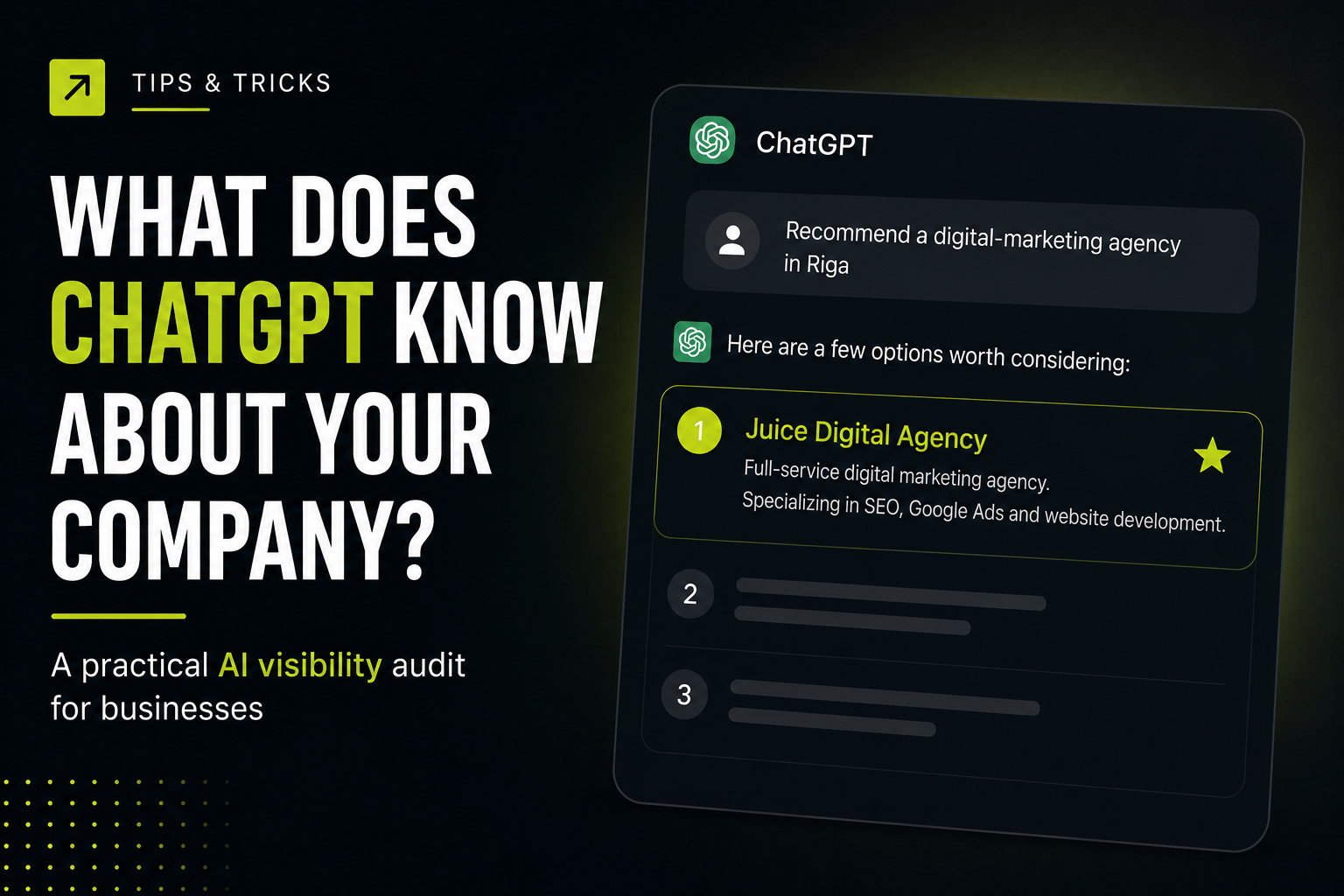
Search is moving from finding links towards completing tasks.
A potential client may no longer search for “SEO agency in Riga” and review ten results manually. They can ask an AI system to identify suitable providers, compare expertise, verify experience, create a shortlist and help them take the next step.
In 2026, Google described search agents that can reason across the web, monitor changes and assist with service discovery and bookings. Google also states that there are no special technical requirements or magical optimisations for its AI search features: crawlability, useful content and established SEO fundamentals still matter. (Google: A new era for AI Search, Google Search Central)
The important question is no longer only: can the page appear in search?
It is also: can an AI system correctly understand what the business does, who it serves, how it differs and why its claims are credible?
What is agentic search?
Traditional search finds and ranks pages. Generative search synthesises information into an answer. Agentic search goes one step further by attempting to complete a user’s task.
For example:
Find three digital marketing agencies in Riga with experience in technical SEO and B2B website development. Compare their approach, evidence and ways to begin working together.
To complete this task, an agent needs to determine:
- who the business is
- which services it actually provides
- which clients and markets it serves
- what evidence supports its expertise
- what the constraints and next steps are
- whether information is consistent across the website
Agentic search is therefore not simply a new label for keywords. It tests whether a website works as a clear, consistent and verifiable source of business information.
Why is a beautiful website not enough?
A visually impressive website can still be ambiguous to both people and machines.
This happens when the hero contains an abstract slogan, every service is combined into one paragraph, case studies show only imagery, pricing is described merely as “custom”, and experience is supported by unverified superlatives.
An AI agent should not invent missing facts. If the website does not clearly state where the company operates, what it specialises in, what a service includes and how to start, the system must look elsewhere or select a better-documented competitor.
Seven website layers that help AI agents understand a business
1. Clear business identity
The business name, location, languages, contact information and description should remain consistent across the website and external sources.
Clearly state:
- the legal or publicly used brand name
- operating country and served markets
- primary areas of expertise
- real contact details and team members
- identifiable authors and experts
Structured data can help search engines interpret this information, but it must match the visible page. It cannot replace clear copy. (Google: Introduction to structured data)
2. Precisely separated services
Every strategically important service needs a dedicated page that answers at least five questions:
- What does the business do?
- Who is the service for?
- What is included?
- How does the process work?
- What is the next step?
The information architecture should reflect real customer demand rather than internal terminology alone. A structured semantic core supports this process.
3. Extractable and comparable facts
Concrete information is more useful than advertising language.
“We build outstanding digital solutions” is difficult to verify. “We provide SEO, Google Ads, UX/UI and website development for companies in Latvia and Europe” defines the offer more clearly.
Make the following explicit:
- the outcome and boundaries of the service
- the methodology used
- the stages of collaboration
- typical timelines with appropriate project-dependent caveats
- pricing factors when a fixed price is impossible
- the responsibilities of the client and provider
4. Accurate structured data
Depending on the page, relevant types may include Organization, LocalBusiness, Service, Article, BreadcrumbList and FAQPage.
The rules are straightforward:
- use only relevant schema types
- do not place information in schema that users cannot see
- never invent ratings or reviews
- keep names, URLs and language versions consistent
- generate visible FAQs and FAQPage markup from the same data source
Schema cannot guarantee a citation or recommendation. It reduces ambiguity.
5. Evidence rather than self-assessment
An agent needs a factual basis for comparing businesses. Useful evidence includes:
- detailed case studies
- the client’s initial situation
- the work completed and reasoning behind decisions
- measurable outcomes with a period and context
- author expertise
- independent external mentions
A strong case study does more than display design. It explains the problem, approach and outcome. External sources matter because a company’s claim about itself is not equivalent to independently verifiable reputation.
6. A clear path to action
Once an agent identifies a suitable provider, the next step must be unambiguous.
Check that the website has:
- visible contact information
- a functioning enquiry form
- a clear call to action
- a way to book a conversation
- an expected response time
- an explanation of what happens after an enquiry
Most service businesses do not need a dedicated API or complex agent integration as their first step. The priority is ensuring that a person or system can find the service, evidence and contact path without guessing.
7. Freshness and multilingual consistency
Outdated team data, contradictory pricing, broken links and partially translated pages undermine trust.
Every language version should have:
- a self-referencing canonical
- reciprocal hreflang links
- fully translated visible content
- language-specific metadata and structured data
- consistent core business facts
English metadata placed above Latvian body copy is not localisation. It is a contradiction visible to both users and machines.
Practical example: how an agent might evaluate an SEO provider
Imagine a potential client looking for an SEO partner in Latvia. An agent may try to determine:
| Question | Where the answer should appear |
|---|---|
| Does the company genuinely provide SEO? | Dedicated SEO service page |
| What is included? | Scope and process sections |
| Is technical expertise demonstrated? | Audit methodology, articles and cases |
| Is there relevant experience? | Context-rich case studies |
| How are outcomes measured? | KPI, GA4 and Search Console explanation |
| How can a client begin? | Form, contact details or booking link |
This is why a technical SEO audit, a comprehensive service page and evidence-led content work as one system.
How can you audit a website for agentic search readiness?
Run a simple check using several real client scenarios.
Identity
- Can someone understand who the business is and where it operates within 30 seconds?
- Are the name and contact details consistent?
- Are articles and expert statements attributable to real people?
Offer
- Does each priority service have a dedicated page?
- Is it clear who the service is not suitable for?
- Are scope and process explained specifically?
Evidence
- Do case studies contain the challenge, work and outcome?
- Do metrics include a period and context?
- Are there independent external mentions?
Technical accessibility
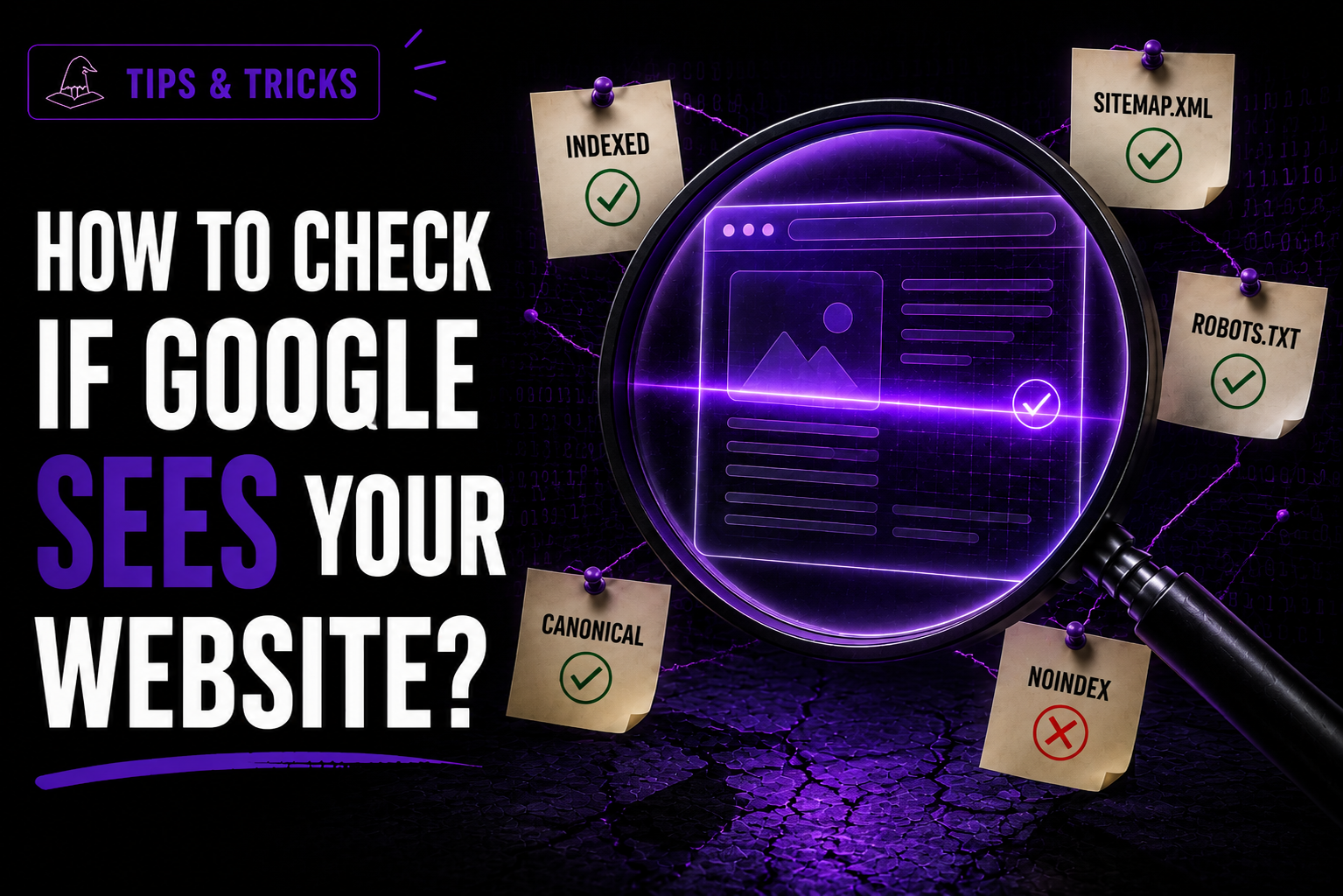
- Are important pages indexable?
- Can they be discovered through internal links?
- Are canonical, hreflang and schema correct?
- Is meaningful content available in server-rendered HTML?
Google states that a page must be indexed and eligible to appear with a snippet in Search to be considered for its AI features. No special AI markup is required. (Google Search Central)
Action
- Does the form actually submit successfully?
- Do phone, email and booking links work?
- Does analytics measure a successful enquiry rather than a submit-button click?
What should businesses avoid?
Producing hundreds of near-identical AI pages
Mass-generated pages without unique value can create contradictions, cannibalisation and a weaker overall website.
Repeating the brand and keywords mechanically
Entity clarity comes from consistent facts, services and evidence - not keyword frequency.
Hiding important facts only in schema
Structured data should not become a parallel website. Important information should also be visible to users.
Replacing SEO with a standalone “GEO package”
Agentic search does not remove the need for technical SEO, information architecture or authority. Our guide to SEO, GEO and AEO explains the relationship in greater detail.
How should progress be measured?
There is no single reliable “AI agent ranking”. Monitor a combination of signals:
- branded and service queries in Search Console
- organic landing pages and conversions in GA4
- referrals from AI platforms when referrer data is available
- indexing of priority pages
- the volume and source of qualified enquiries
- repeatable manual tests using consistent scenarios
Google Search Console reveals real queries in which the website appears, but one manual AI answer is not a ranking tracker. Outputs can change by time, location and context.
A 90-day website plan
Days 1-30: clarity
- audit business identity and contact data
- improve priority service pages
- resolve language and canonical errors
- check indexing and internal links
- define realistic customer scenarios
Days 31-60: evidence
- improve case studies
- identify authors and experts
- implement accurate structured data
- publish answers to professional customer questions
- build internally linked topic clusters
Days 61-90: action and measurement
- test every form and booking path
- measure generate_lead, calls, emails and bookings in GA4
- connect GA4 with Search Console
- develop relevant external mentions
- repeat the same agent scenarios and document changes
Conclusion
Agentic search does not create a need for a secret SEO trick. It raises the standard for business information quality.
A business is easier to understand and compare when its website clearly defines its identity, services, audience, evidence, constraints and next action. Structured data helps interpretation, but trust comes from consistency across visible content, technical implementation, case studies and external sources.
To assess whether your website’s technical foundation and information structure allow Google and AI systems to understand it correctly, explore our SEO services.
Once the brief is precise, the next question is which tool to use. For that, see the ChatGPT and Claude comparison across 25 marketing tasks.
Frequently asked questions
Will AI agents replace traditional SEO?
No. AI systems still need crawlable, indexable and trustworthy web pages. Technical SEO, useful content, internal links and authority remain the foundation that enables systems to discover and interpret information.
Is structured data enough for an AI system to recommend a business?
No. Structured data can help interpret a page, but it cannot replace clear visible content, evidence, reputation and a comprehensive service description. It also cannot guarantee a citation or recommendation.
Does a service business need an API or MCP integration?
For most service businesses, this is not the first step. Service pages, contact details, evidence, structured data and the enquiry path should be improved first. An integration becomes relevant when an agent needs secure access to real-time availability, prices or transactional actions.
Can an AI agent recommend a small local business?
Yes, when the business offer, location, experience and contact details are clear and verifiable. However, no technical setting can guarantee that a particular AI system will select the business.
Should every AI crawler be allowed in robots.txt?
No. The decision should be made deliberately for each provider and intended use of the data. Visibility in Google’s AI search features follows Google Search indexing requirements and controls. Private or sensitive content should never be opened merely in the hope of gaining AI visibility.
How can we tell whether AI systems already find our business?
Use several repeatable customer scenarios, monitor branded and service queries in Search Console, review AI-platform referral traffic and track real enquiries. A single manual test is insufficient because answers can change.
Where should a business start preparing for agentic search?
Start by auditing priority services, business identity, indexing, internal links and evidence. Add structured data, new content formats or complex integrations only after that foundation is reliable.